ECR Ion Beam System
EIS-200ERP
ECR Ion Beam System
EIS-200ERP
- New Products
- Microfabrication equipment
Ultra-fine Machining Using ECR Ion Beams
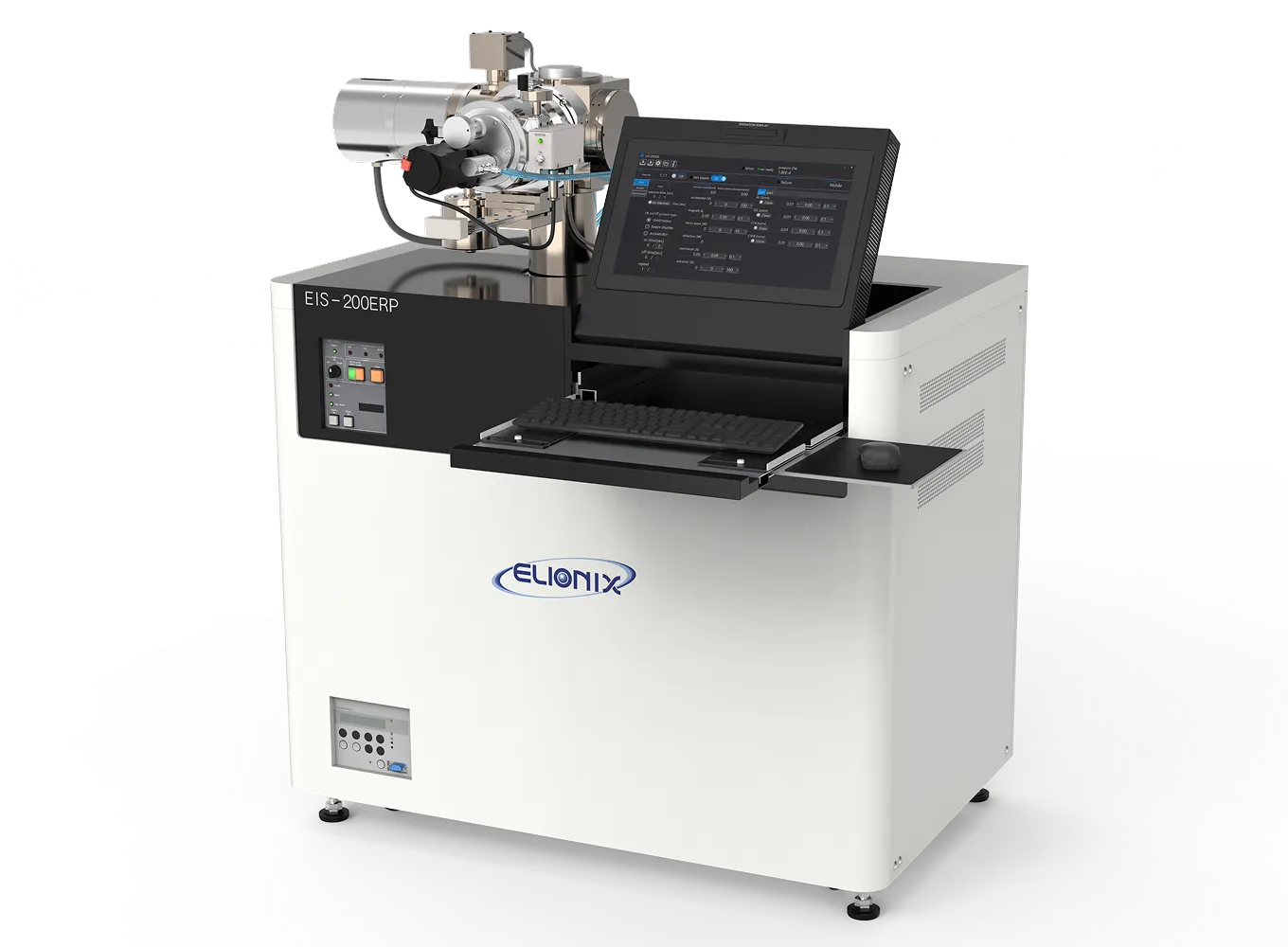
Key Features
Compact and high-performance
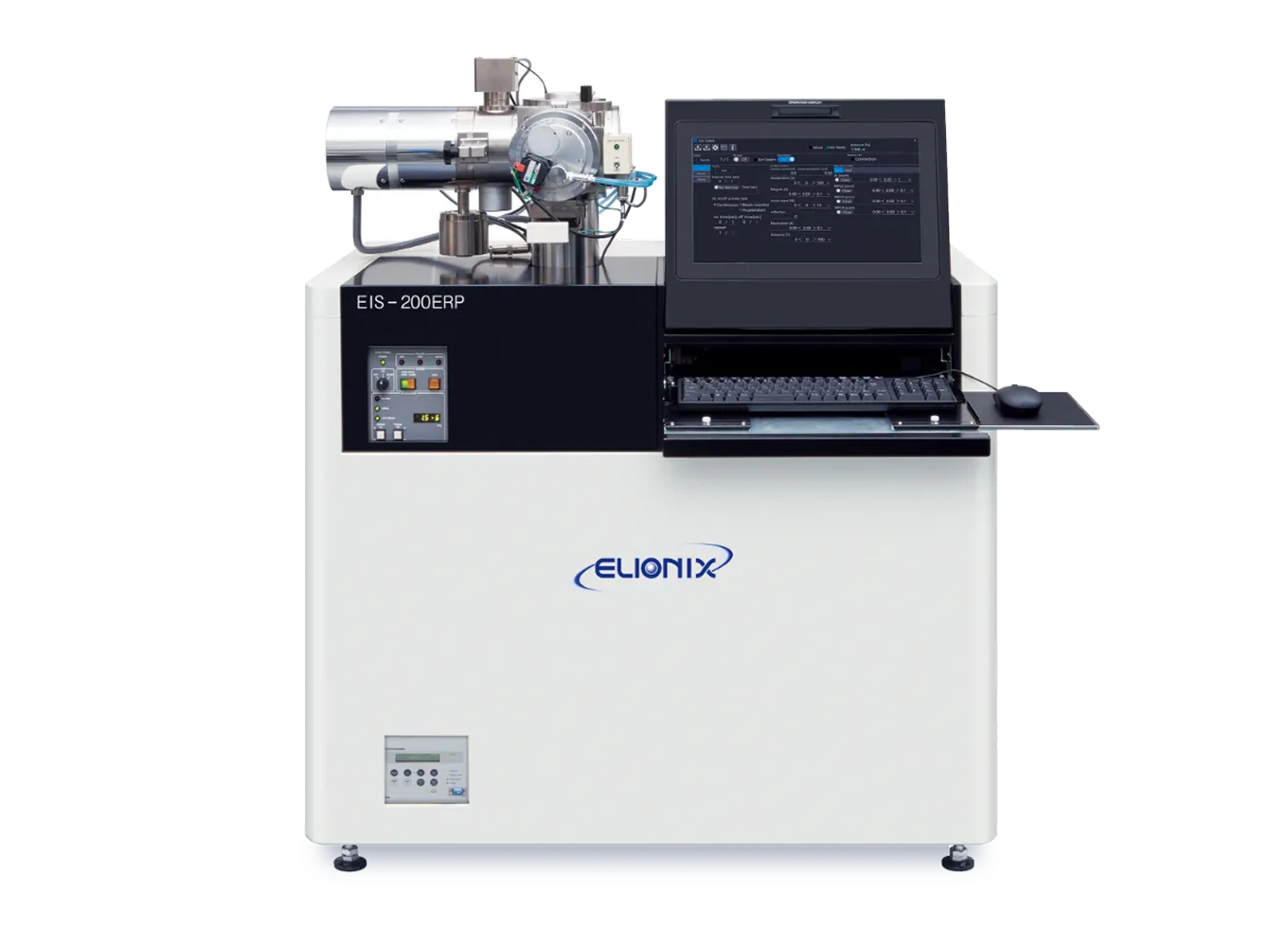
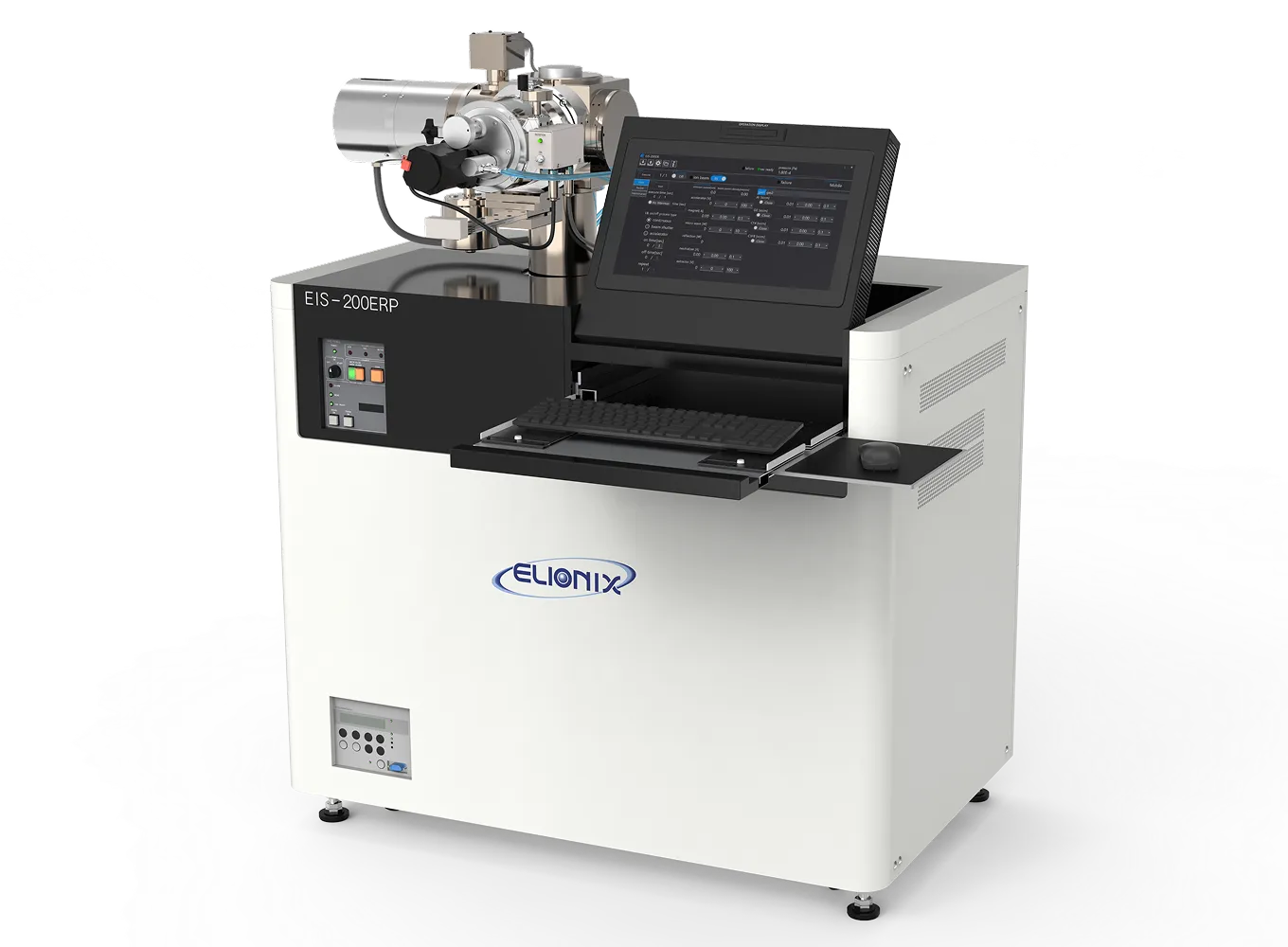
With its compact dimensions of 1050 × 650 × 1260 mm, it can be installed in a variety of environments. Using an ion beam accelerated in a vacuum, it enables anisotropic etching with minimal undercut and side cut in the submicron range.
Inert gases and reactive gases can be used
In addition to inert gases such as Ar and Xe, reactive gases such as O₂ and CF₄ can also be used as ion sources, making reactive etching possible.
Wide-ranging expandability
By installing an optional deposition unit, the system can also be used as a sputtering system. It supports long-slot sputtering, enabling highly directional material deposition.
Key Specifications
| Ion Gun | ECR-Type Ion Gun |
|---|---|
| ECR-Type Ion Gun | Ar, N₂, O₂, CF₄, etc. *Please consult us regarding CF-based gases |
| Acceleration voltage | 20 V to 3000 V |
| Beam current density | Ar: 1.5 mA/cm² or higher (at 2 kV acceleration) |
| Effective beam diameter | Φ20 mm (FWHM 35 mm) *At maximum |
| Maximum sample size | Φ4 inches |
| Sample stage | Rotary tilt single-axis stage (with water-cooling mechanism) |
| Ultimate vacuum | 3×10⁻⁴ Pa or less |
| Operating vacuum range | 6×10⁻³ Pa to 2×10⁻² Pa |
| Exhaust system | Turbo molecular pump and oil-sealed rotary pump (can be changed to dry pump) |
| Recommended installation space |
W 2300 mm × D 2000 mm × H 1500 mm |
Applications
EIS-200ERP
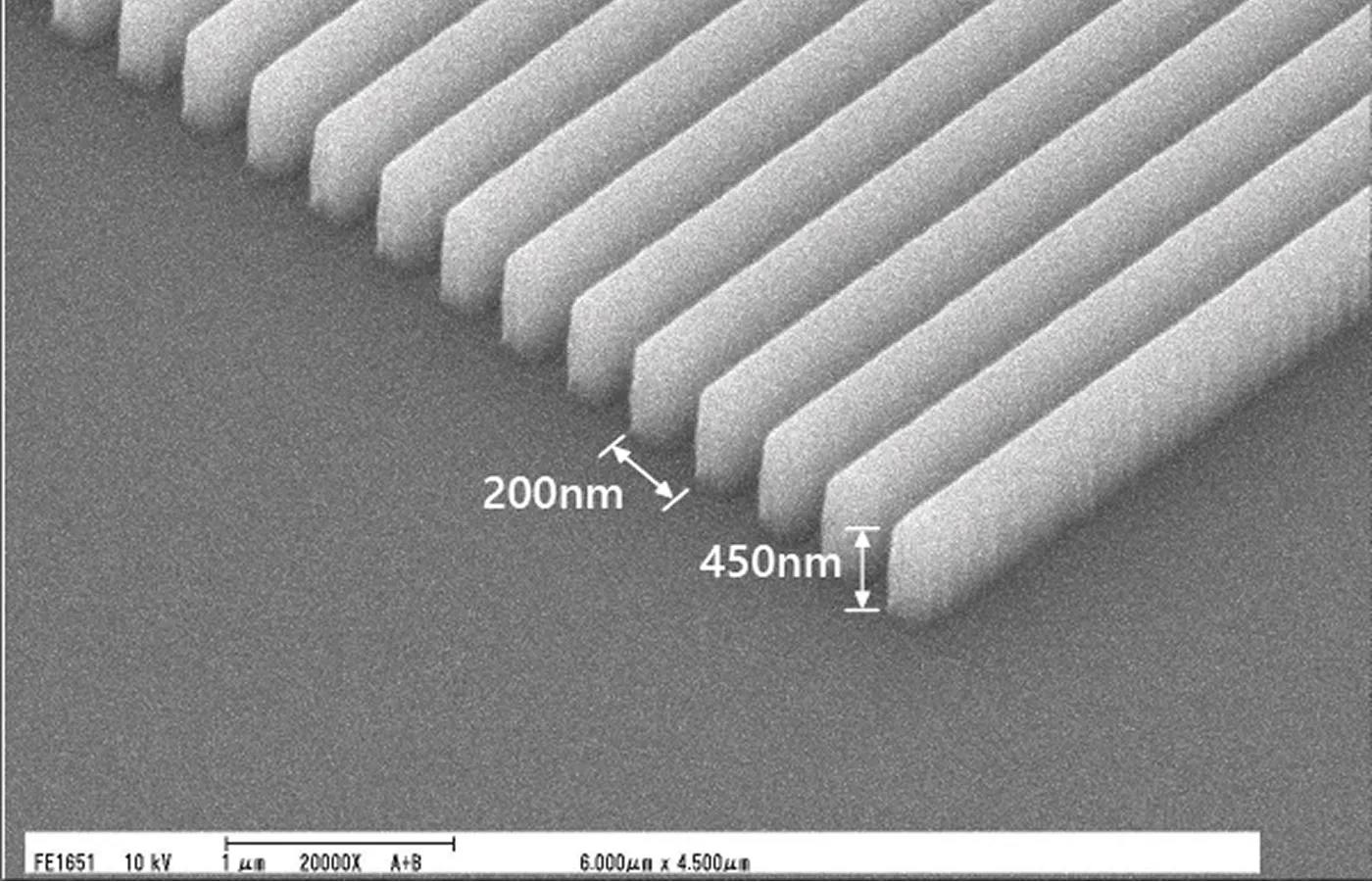
Line-and-space pattern with a pitch of 200 nm and a depth of 450 nm
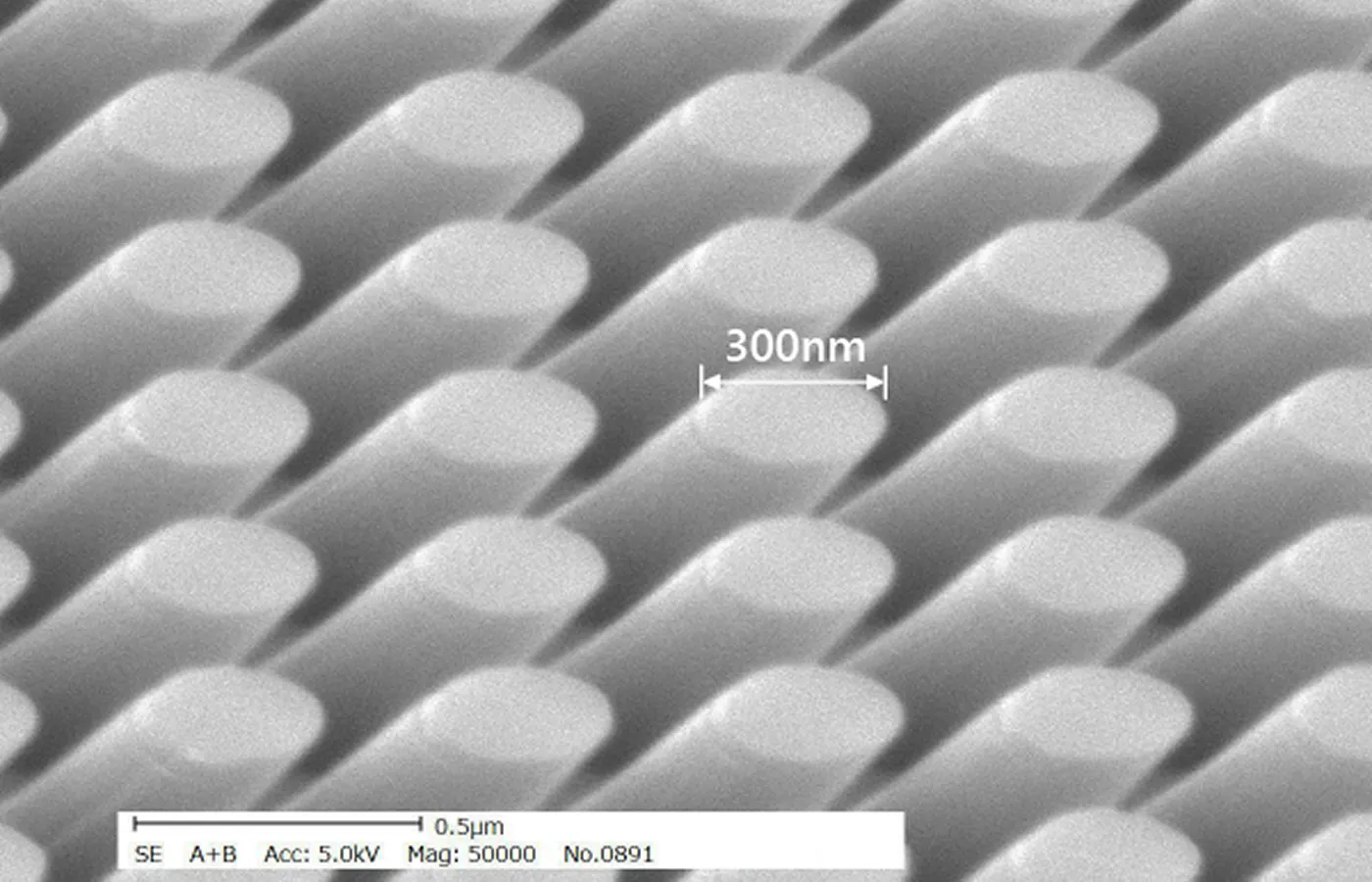
Φ300 nm, a stepped dot pattern with a depth of 300 nm
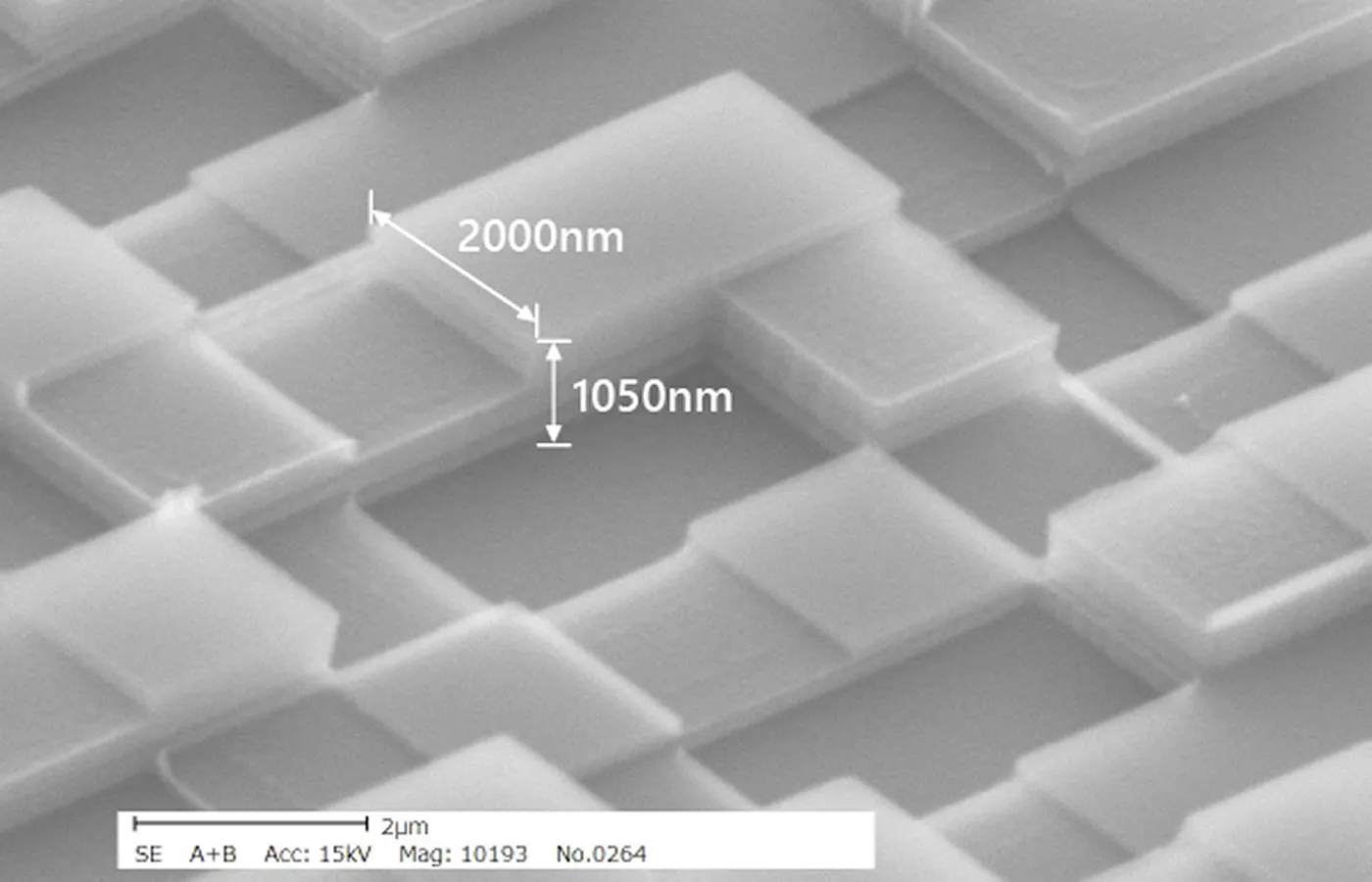
Hologram patterns with a maximum depth of 1050 nm
Φ35 nm, pillar pattern with a pitch of 100 nm
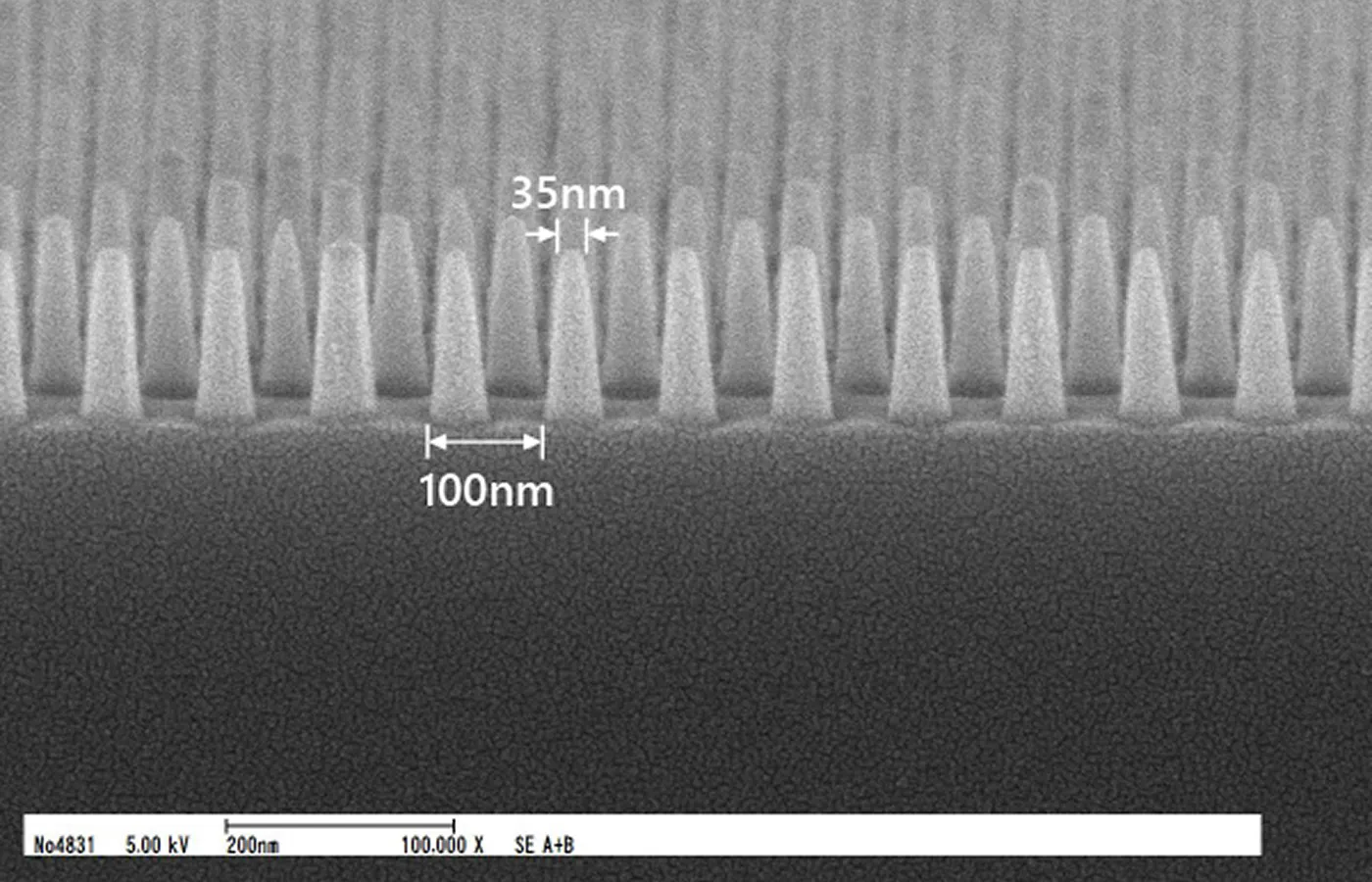
EIS-200ERP + Options
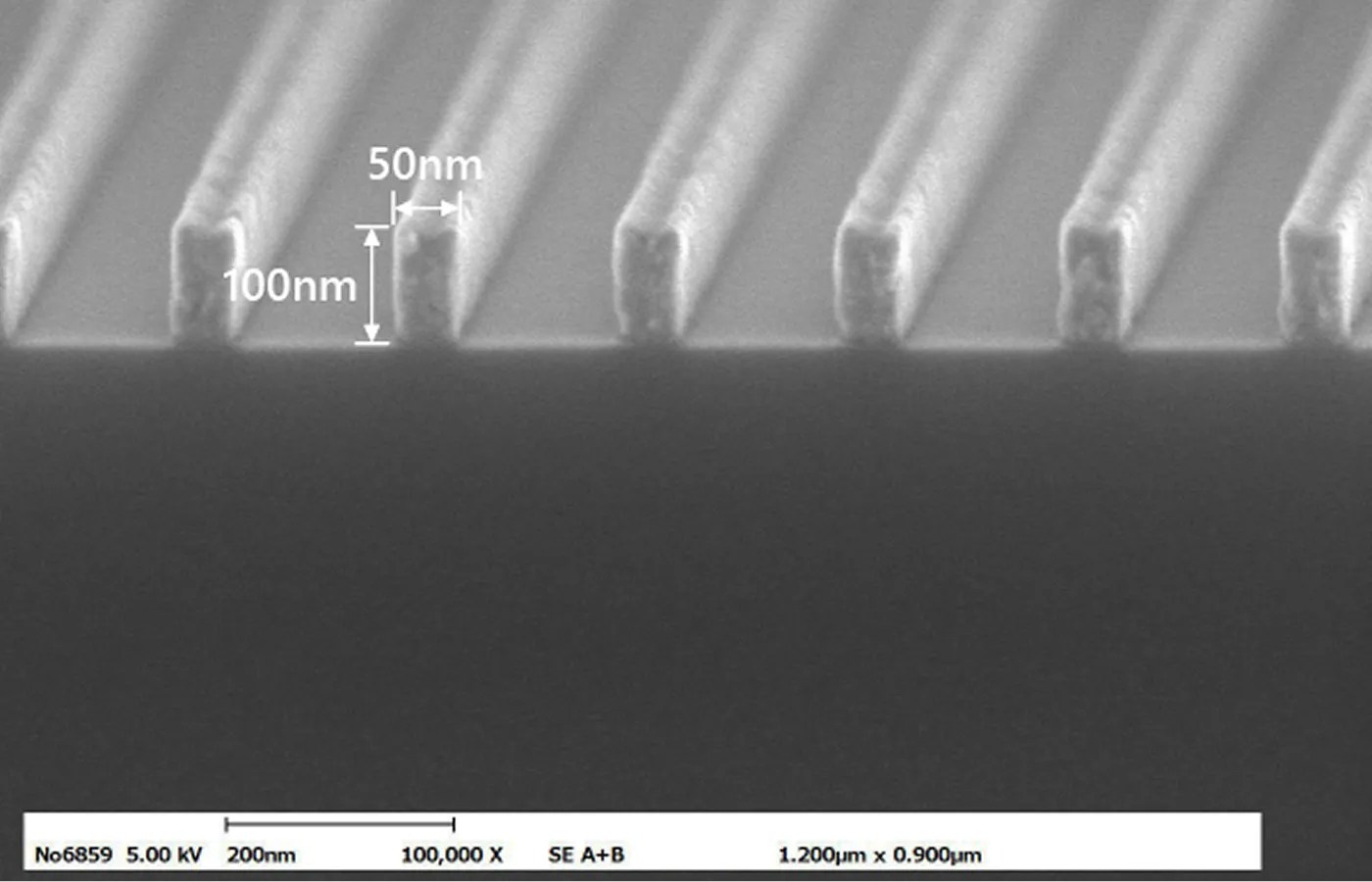
A straight-line lift-off pattern with a line width of 50 nm and a height of 100 nm
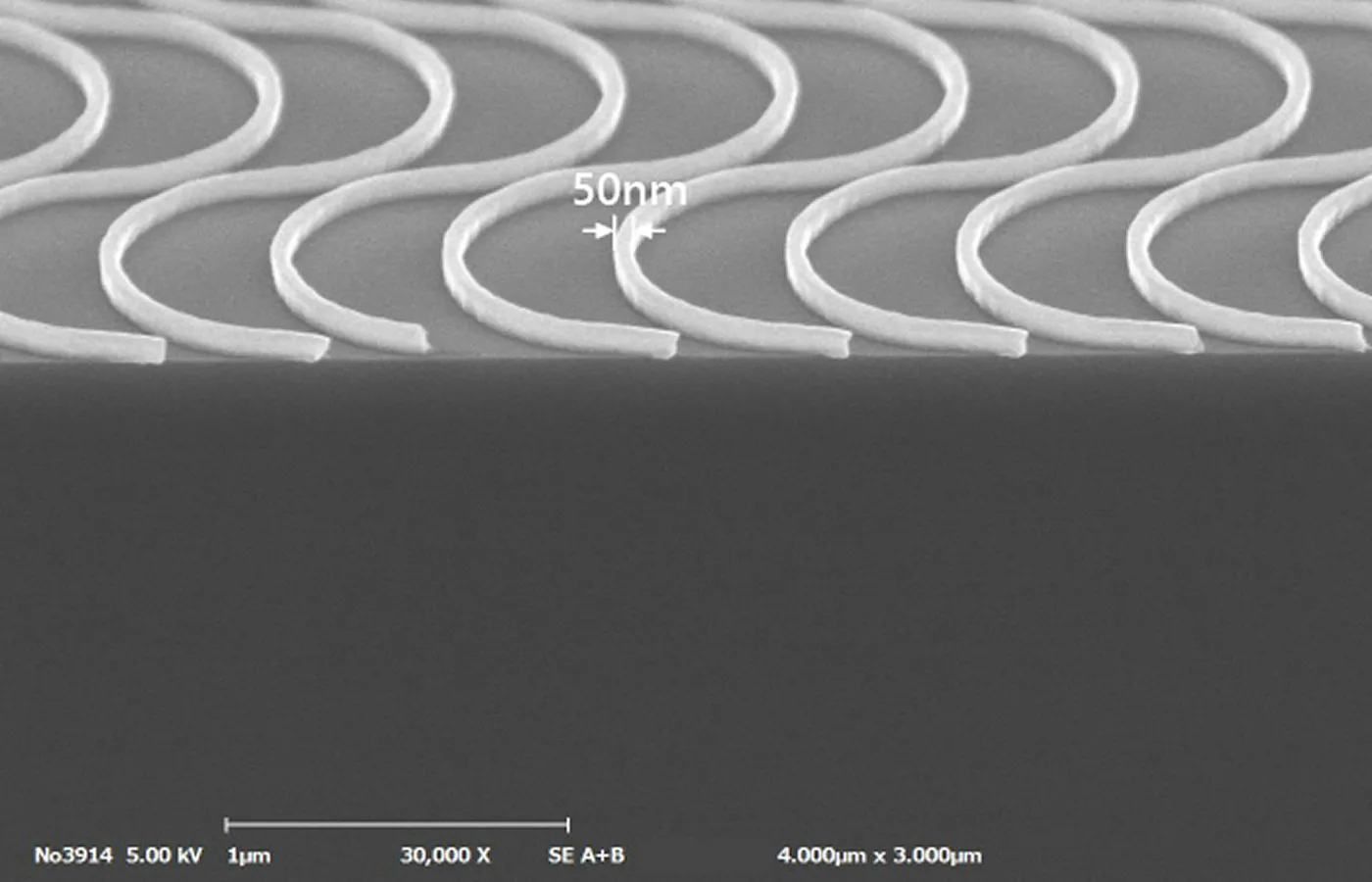
Curved lift-off pattern with a line width of 50 nm and a height of 100 nm
Lift-off pattern with a line width of 100 nm and a height of 100 nm
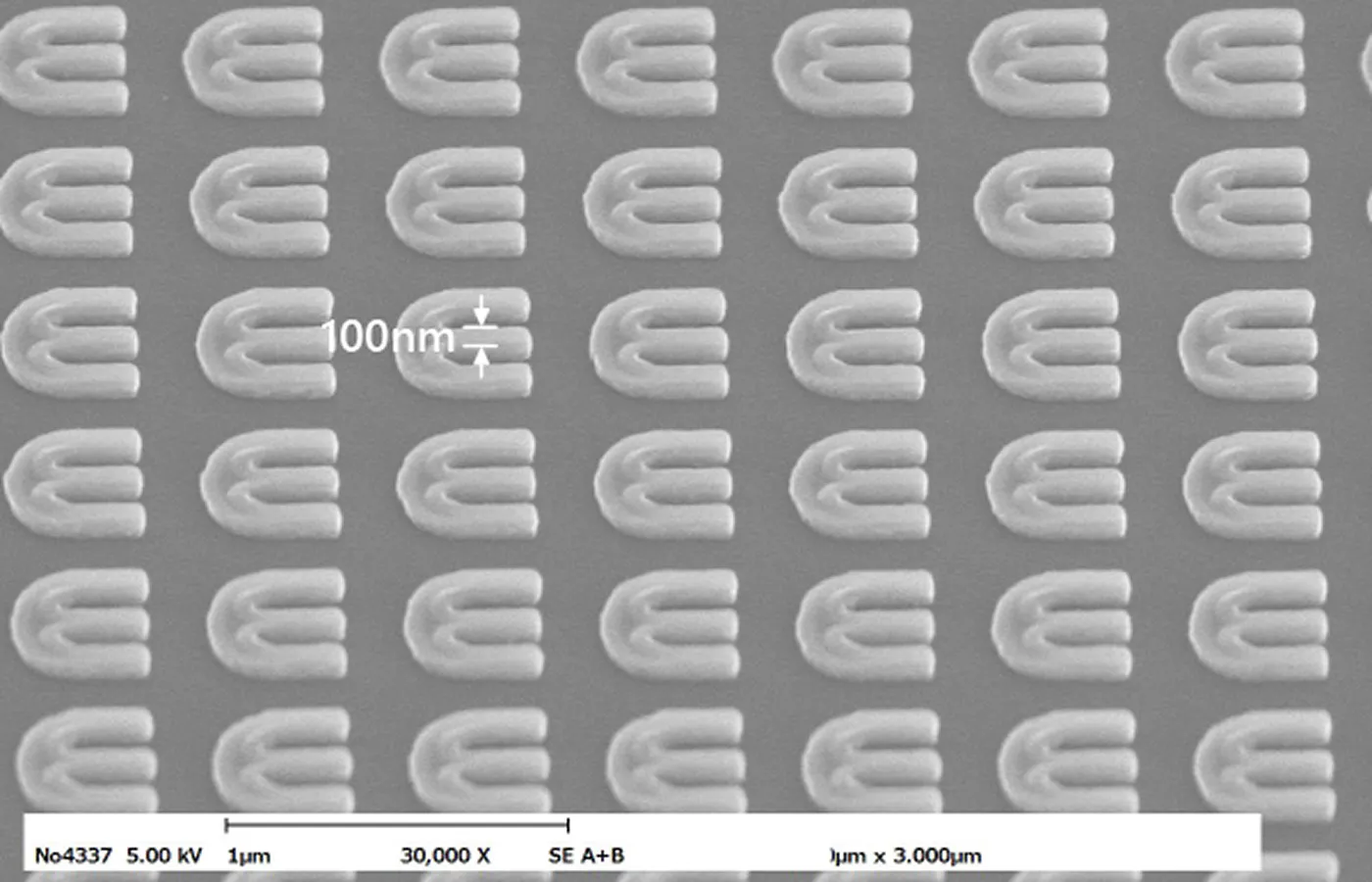
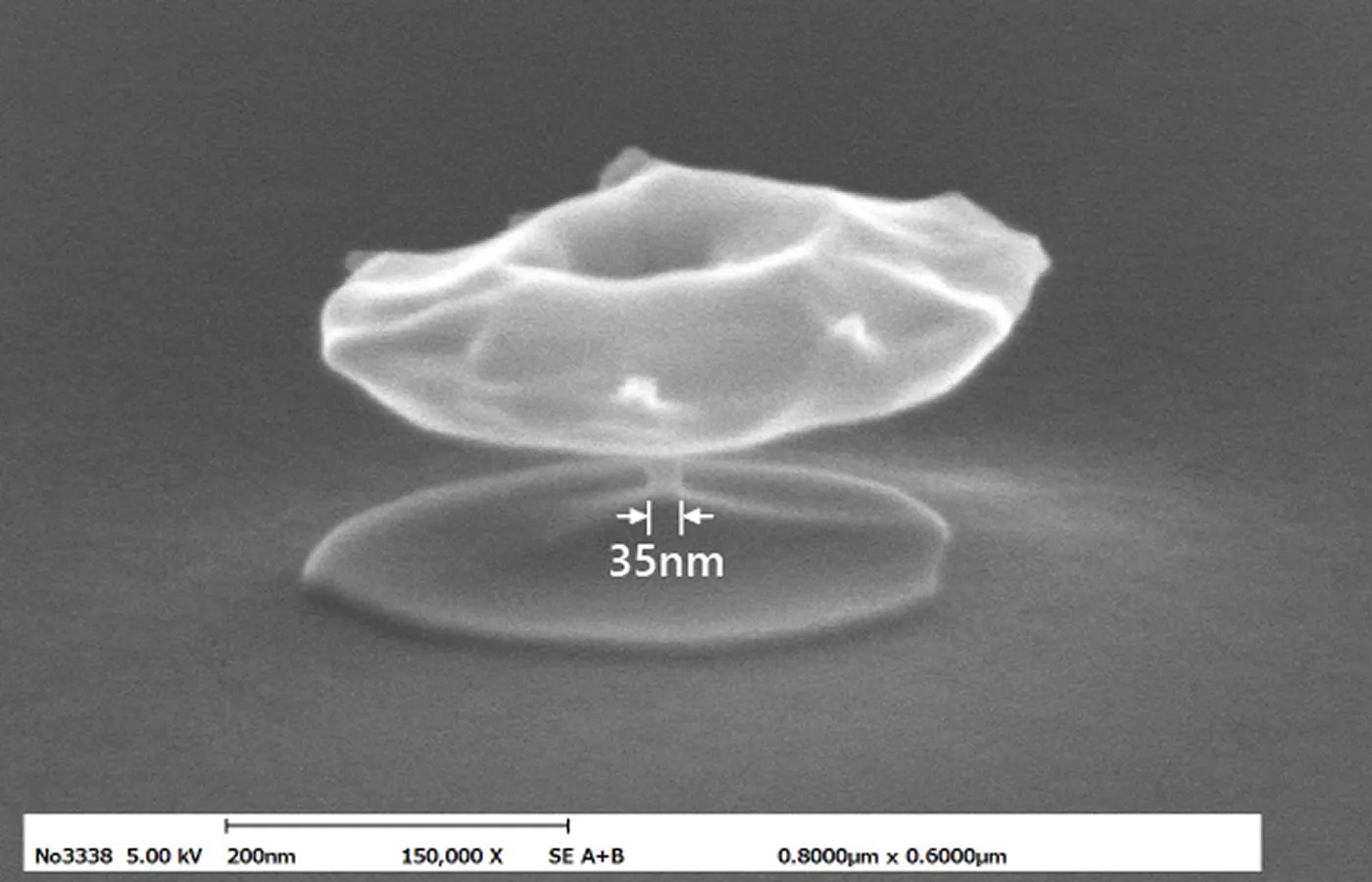
Mushroom-shaped structures fabricated using the T-gate process and the lift-off process